
8. May 2026
Oregon’s Unemployment Fund Is Flush With Cash. So Why Are Workers Still Waiting?
Every business owner knows this feeling:
You pay the tax.
You file the report.
You meet the deadline.
You follow the rules.
And then, when the government is supposed to perform its side of the bargain, suddenly the urgency disappears.
That is exactly what appears to be happening with Oregon’s unemployment system.
Employers pay unemployment taxes with the understanding that the money will be used to support workers who lose their jobs through no fault of their own. It is not optional. It is not charitable. It is a mandatory government-controlled insurance system funded by businesses.
So when qualified workers are left waiting weeks or months for benefits, the question is not just about poor customer service.
The question is:
What exactly is the government doing with the money businesses were required to pay?
Because Oregon’s unemployment fund is not broke.
Not even close.
According to the U.S. Department of Labor’s 2024 Trust Fund Solvency Report, Oregon’s unemployment trust fund had a reserve ratio of 5.51.
For comparison:
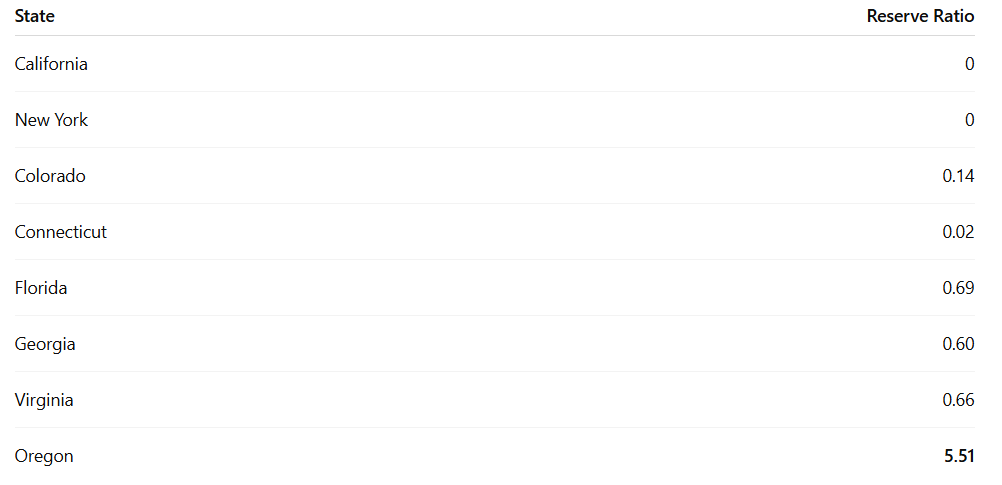
That is not barely solvent.
That is not “we’re doing our best with limited resources.”
That is Oregon sitting on an unusually strong unemployment reserve while workers still report delays, confusion, and no meaningful answers.
And the fund is not just sitting there.
It is earning interest.
Oregon reportedly earned:
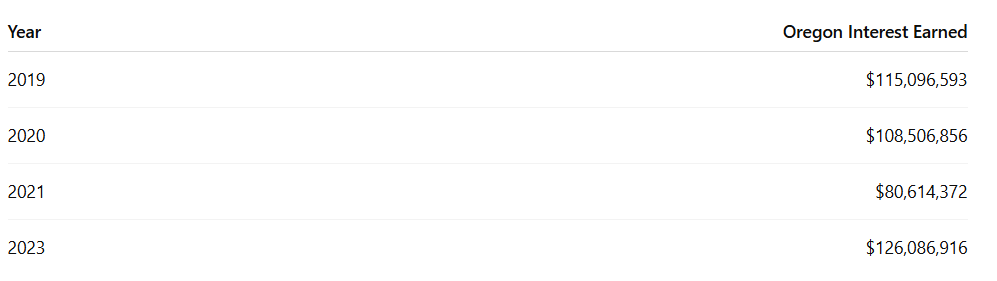
That should make every employer paying unemployment taxes stop and ask:
If the fund is this healthy, why is the system still failing the people it was built to protect?
Because business owners do not get this luxury.
A contractor cannot collect payment, delay the work, call the project “processed,” and expect everyone to clap.
A supplier cannot take your money, sit on the order, earn interest, and say the materials are “in review.”
A subcontractor cannot miss payroll and explain that the checks have been “administratively advanced.”
But government agencies seem to operate in a different reality — one where words like processed can sound like progress while meaning almost nothing to the person waiting.
In unemployment claims, “processed” does not necessarily mean approved.
It does not necessarily mean denied.
It does not necessarily mean paid.
So what does it mean?
That the claim moved somewhere inside the machine?
That someone touched the file?
That it was shifted from one government pile to another?
To the worker waiting for rent money, groceries, fuel, or a final answer, that distinction is meaningless.
To the employer who paid the tax, it should be infuriating.
Because this is not free money. It came from businesses.
Every dollar sitting in that fund was taken from employers under the promise that it would serve a specific public purpose. That purpose was not to create a government savings account. It was not to generate impressive interest. It was not to make an agency look financially responsible while the people it serves are left stranded.
The purpose was to pay unemployment benefits when they are needed.
Not later.
Not eventually.
Not after eviction notices.
Not after repossessions.
Not after credit damage.
Not after workers are so financially destroyed that the benefit becomes a reimbursement for harm instead of a bridge through hardship.
That is the part people should be angry about.
Government is very good at enforcing deadlines against the public.
Miss a tax payment? Penalty.
Miss a permit requirement? Stop work.
Miss a payroll filing? Fine.
Miss a licensing deadline? Problem.
But when the government misses its practical obligation to act promptly, suddenly the consequences become abstract. Suddenly there are staffing issues, system issues, review issues, workload issues, modernization issues, process issues.
Businesses do not get to hide behind that.
So why does the government?
If Oregon can collect unemployment taxes from employers on time, it should be able to distribute unemployment benefits to eligible workers on time.
If Oregon can maintain one of the strongest unemployment trust funds in the country, it should be able to explain why people are still stuck waiting.
And if Oregon is earning tens of millions of dollars in interest from employer-funded unemployment taxes, then the public deserves to know whether delays are just incompetence — or whether the system has quietly become more interested in preserving the fund than serving its purpose.
Because from the outside, it looks ugly.
It looks like businesses are being forced to fund a program that the State controls, delays, and benefits from financially.
It looks like workers are told to follow every rule while the agency gives itself unlimited room to stall.
It looks like “processed” has become a bureaucratic magic word used to make inaction look like performance.
And it looks like the government has forgotten something basic:
Tax money is not government money.
It is money taken from the public for a stated purpose.
When the government collects unemployment taxes from employers, it is not supposed to win by hoarding the fund. It is supposed to administer the fund competently.
A huge reserve is not impressive if the system is failing the people it was created to help.
Interest earnings are not a victory if workers are waiting too long to be paid.
Solvency is not success if benefits arrive after the damage is already done.
Business owners should care about this even if they have never personally filed for unemployment.
Because this is the same pattern they deal with everywhere:
The government demands compliance, collects money, creates delays, avoids accountability, and then uses sanitized language to make the failure sound procedural instead of personal.
But it is personal.
It is personal to the worker waiting on benefits.
It is personal to the employer paying into the system.
It is personal to every taxpayer watching public money disappear into a machine that somehow always has enough authority to collect — and never enough urgency to perform.
So the question is simple:
Is Oregon running an unemployment insurance system for workers and employers, or is it running an interest-bearing government reserve account that occasionally pays claims when the pressure gets high enough?
Because if employers are required to fund it, workers are required to rely on it, and the public is required to trust it, then Oregon should be required to answer for it.
Not with another vague report.
Not with another “processed” statistic.
Not with another excuse.
With the money.
Where it came from.
Where it is sitting.
How much interest it earned.
How long people waited.
And why a government agency with a fund that healthy still cannot deliver benefits when they matter most.